| « Architectures of time, form and meaning | Being a painter in a man's world » |
Sculpting ideas
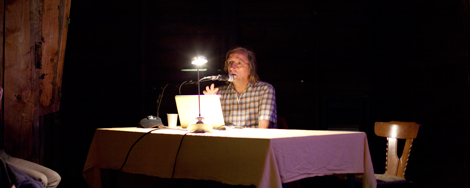
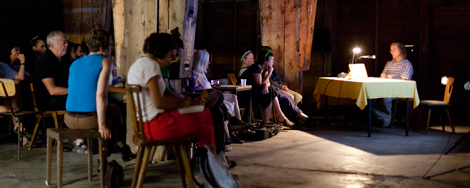
On Friday, renowned sculptor Manfred Pernice discussed his approach to, and ideas concerning, art. His sculptures are made from simple, everyday materials - plywood, one of his favoured materials, appeals to him precisely because of its low quality textures. These choices underlie much of what he does. He illustrated his talk with a wide array of examples of his work, highlighting various aspects and themes which have interested him.
Pernice often employs the work of other artists in his pieces. This collaborative process creates layers of art: paintings included within his sculptures remain works of art in their own right, as the work of the respective artist - but placed within the context of his work take on new layers of meaning. Diverse subjects and ideas arise, but some themes seem to be recurrent, such as place - from villages in Italy to new towns in Scotland - and industrial process, such as the linoleum and glass industries.
Many of his sculptures are not fixed in their construction. This, he suggests, is a more open way of considering sculpture. The particular arrangement of the pieces of a work in a certain exhibition need not be final: they can - and indeed should - be rearranged. The very multiplicity of possibilities is a key point of interest for him. How collectors who buy his pieces then choose to arrange them, of course, is another issue.