| « History and the Studio | Ancient Lamentations in the Modern City » |
A Utilitarian Art
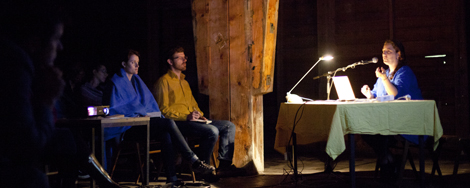
In Hallein yesterday we were introduced to the work of the Immigrant Movement International. The movement’s founder, Tania Bruguera, presented us with the background and ideology which led to this project, and the her belief in art as a political tool.
Bruguera is a great believer in what in her native Spanish is titled Arte Útil. It is a notion which it difficult to translate - in English it has been rendered as “Useful Art”, but this perhaps does not do it justice. It is an art which refuses to disassociate itself from social and political responsibility, an art which stands for much more than itself. It is an engaged art which, in the tradition of Emile Zola, stands as an aesthetical-political authority. It is art which attempts to achieve. It is utilitarian in the original meaning of the word.
Based in New York, the IMI seeks to empower immigrant populations, redefining the concept of the “citizen” within a twenty-first century context. Through programmes of workshops, classes and events, immigrant communities are encouraged to find and generate links between the creative and the practical. Invited artists work with the community, while the project is supported by a network of volunteers, bridging gaps between difference. In her work art does not merely serve a political purpose: it is a political act.