| « An Homage to Albrecht Dürer | Archaic Way of Taking Photos » |
Bleeding Flowers
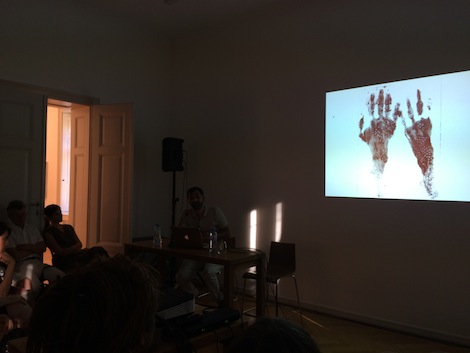
Canned tuna led to weird stomachache. I have been staying in bed all day long, yet still feeling tired. Today, I’ve realized that the hectic life in the Academy became such a part of me in only 3 weeks. I feel that I’ve missed a lot today. Now, Marc Monzo’s talk is taking place and I’m writing these lines.
Last night, Imran Qureshi gave a talk at Galerie Ropac. Today, I have been thinking of the bleeding flowers of Imran Qureshi. Flowers have been an important element for feminist painters such as Georgia O’Keeffe or Judy Chicago. Besides its resemblance to vagina in terms of form, re-narrating the characteristics that are attributed to women and flowers was crucial to them. In Qureshi’s oeuvre flowers are symbols of life and they bleed. The dichotomies such as life and death, domestic and uncanny resonate in the work of Qureshi.

Miniature is a technique that requires serious concentration. During the talk, Qureshi mentioned how he started to paint miniatures. The painter used to believe his temper would never fit to such a calm way of working, however his professor insisted on him to try. After a while, Qureshi decided to challenge the given regulations of this centuries-old tradition: he played with the framing – nowadays he even works with installations – or painted contemporary figures in traditional postures of miniatures – for instance, his brother in 1970s costume. Such a quaint tenet alters in the hands of Qureshi.
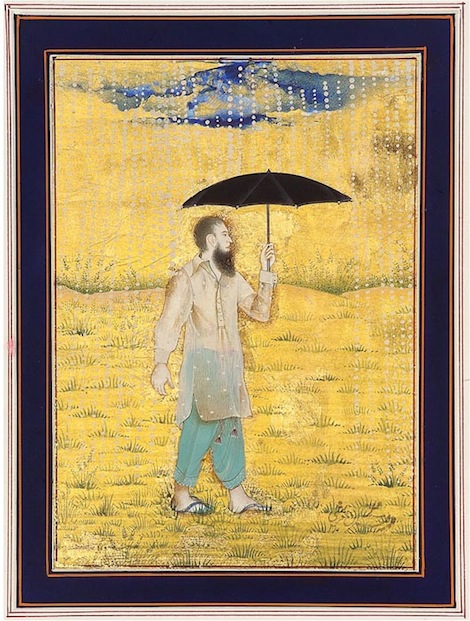
Imran Qureshi, Moderate Enlightenment, 2009
Collection: Ali & Amna Naarvi. Courtesy of the artist and Corvi-Mora, London.
Among those figures, one of them is Qureshi’s religious student, who was making music and carving sculptures like all the others in the art school. However, because of his religious clothes, he was always othered as “The Molla”. In some paintings, the student is wearing socks with a camouflage pattern. According to Qureshi: “If we wear such patterns, this becomes a fashion statement. But when a religious person wears this, it becomes a threat.” The white-knucle that aroused especially after 9/11…
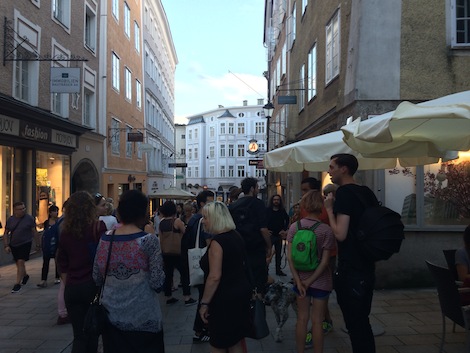
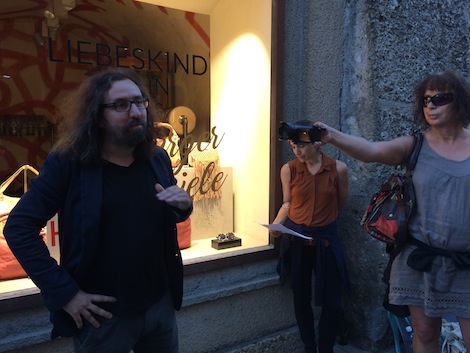
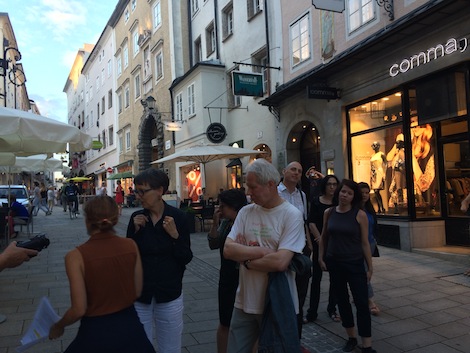
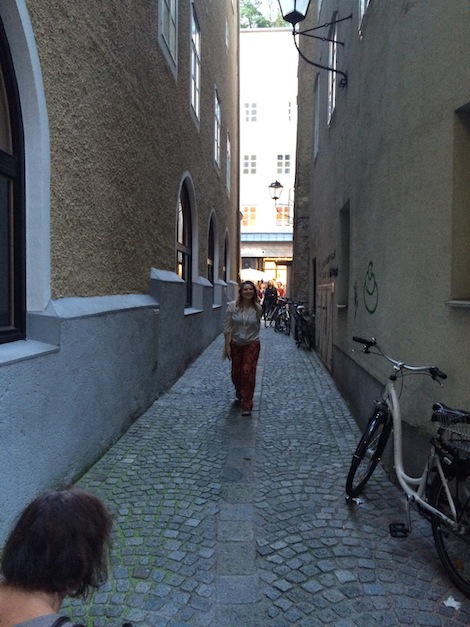
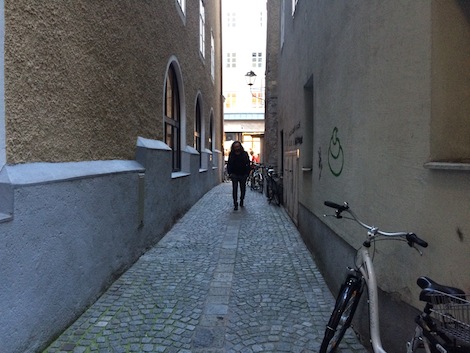
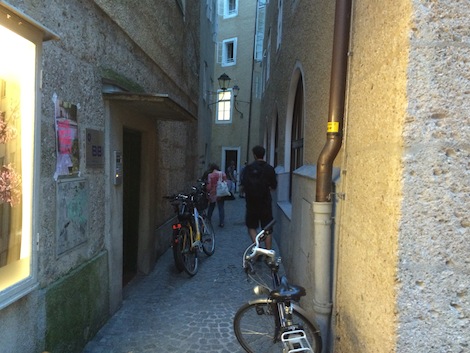
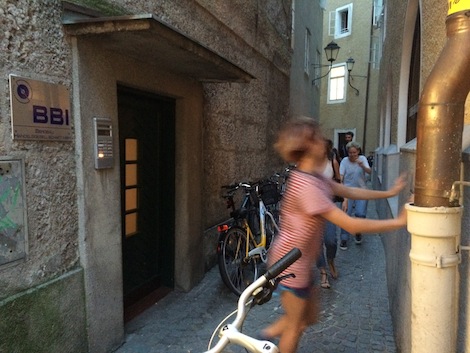
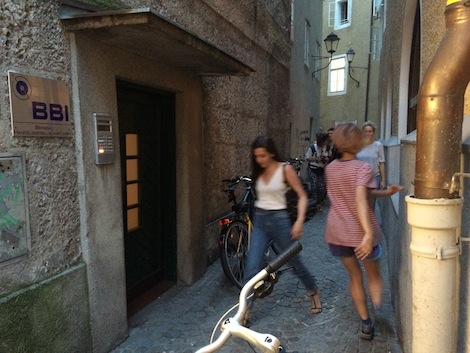
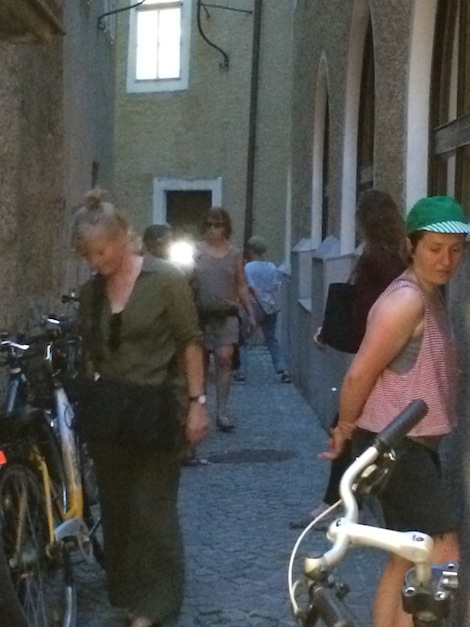
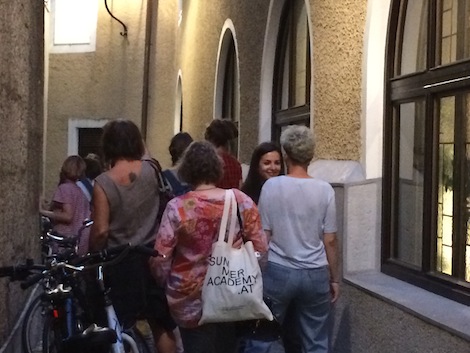
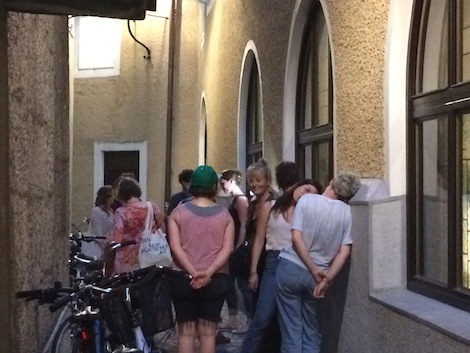
Imran Qureshi’s talk was followed by a public intervention of the performance artist Daphna Meros, who is taking the Public Space class. Meros problematizes the signs in the city and the (silent) regulations generated by/for the pedestrians. The intervention was consisted of two parts (unfortunately, I had to leave before it was over as a result of dizziness). In the first part, Meros asked the participants to walk through a narrow alley – first, one by one then with a partner and afterwards in an uncontrolled flow; by looking at the floor, to the sky; walking backwards; making zigzags; stopping to make eye contact and not allowing other to pass…Using different speed and changing the order transformed the intervention into an urban dance.