| « A Letter to R | An Encounter with a Web » |
Notes from the conference Global Academy?
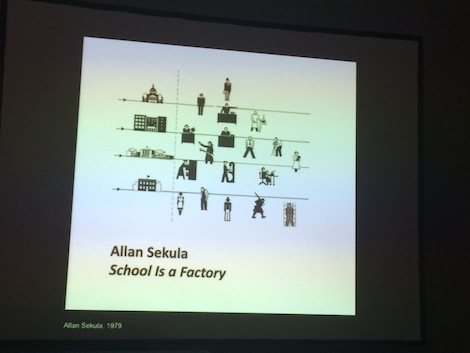
From Sam Thorne's lecture Art School Confidential
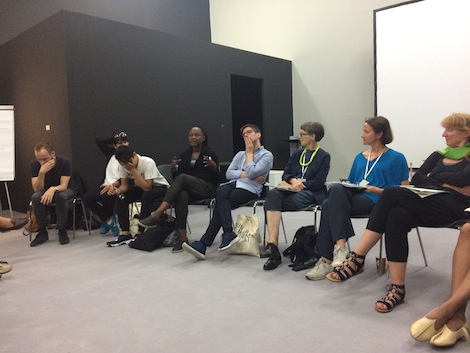
Last weekend, the Academy had guests from various parts of the world such as Dhaka, Amman, Arnheim, London... Hildegund Amanshauser, Sabine B. Vogel, Simone Wille have been working for 1.5 years to realize this conference. They were curious: "How do other institutions in the world deal with contemporary art education?"
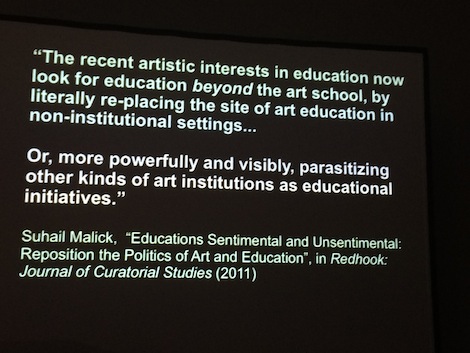
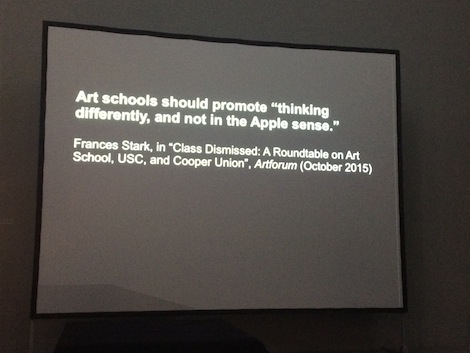
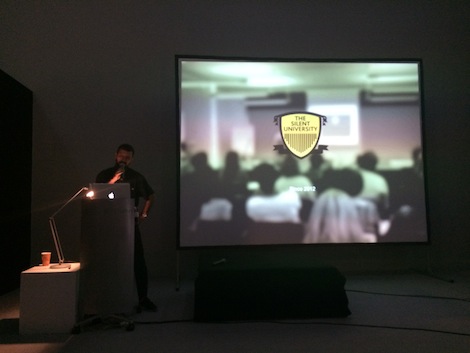
Ahmet Öğüt presenting The Silent University
Self organized, artist-curator run platforms/schools/organizations RAW Material Company, SOMA, The Silent University, Samdani Seminars, Open School East, Casa Tres Patios, ruangrupa and Triangle Network prepresented their understanding of education and structures they've built. Inevitably, problems vary, depending on the geography or country the platfrom/school is placed.
As you have already recognized that the title of the conference ends with a question mark. Seeking new forms for art education drags lots of questions in tow, indeed. Therefore, I've decided to write down some of the questions that were posed during the presentations and discussions besides some keywords.
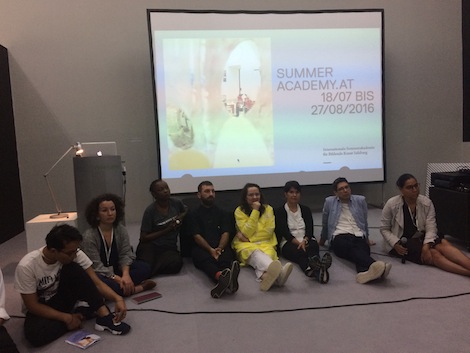
Questions:
What kind of exchange is possible between these new models?
How come critical thinking can be presented?
What is your programme?
How do you develop it?
Who are your lecturers?
Who is your audience?
What constitutes the local in relation to global?
Isn't the word "global" problematic per se?
Where does the notion of global come from?
How to find new finds of getting money not only one sponsor?
How are the funds constructed?
Notes:
structuring thinking
collective learning center
how to sweep away hierarchy
Not replacing an institutional setting but adding a layer
Rethinking alternative methods for the current education system
Degrees validation qualification
Pablo Helgueara's idea: transpedagogy
Internationalism
expanding locality
The problematics of terminology... As the Koyo Kouoh from RAW Material Company said: "We are all struggling those words." how to use these already existing words in a new context with different intentions
Exchanging the curriculum
Collaborations for long-term researches
Dealing with same subjects in different local contents
Challenges of the futures
Visions
Financial problems
The importance of independence of funding money, finding new forms of finding funding
Politics of funding
Political correctness
Infiltrate
Hacking
Parasithic element
Borrowing
Superimposing
Updating the pedagogic heritage
Sharing instead of being competitive
Censorship