
Making a Stepping Stone in Painting Practice - A Talk with Mark van Yetter
On the third day of Summer Academy, I met with Mark van Yetter who is teaching a course in painting focusing. Mark is here for the second time, having been a co-teacher in 2014. He noted the openness and the friendly atmosphere of the Academy kept, as one of the reasons that propelled him to take this job. We sat in his spacious classroom and chatted about the course and the art of painting.

Mark van Yetter after our talk
You’re exploring formal decisions in painting and you are also considering each individual practice of every participant. What does your teaching process look like?
Well, the first step was to have everybody set up their own place to work and start with their normal practice. I spent the first day and part of the second day just meeting with each person one-on-one and seeing where they’re at and trying to locate what they want out of the course, learn their interests - just making a personal relationship, which I think is important because then you can open up to talk about the decision making.
In what way will you engage with your students except for the conversations? Yesterday, you had an exercise with a live model, which was timed. What other exercises are you planning to do?
There are several different exercises, mostly with drawing, since that’s the foundation of painting. With the life drawing, I’ve decided that we have the model for about three hours and the large majority were 10-20 second drawings. Somehow, everybody thought it was crazy to spend three hours doing such fast, short drawings, but I think they could spend a week on it! The large majority of the students have the preconceived ideas, as they learned certain ways about form, contour or line in the figure and they feel really comfortable with them. So, when they try to find a form in a figure quickly, in 10 seconds, it means that you’re gonna have to be able to make a confident line. By doing that, they have to be able to look at something and then put it on the paper quickly. And they’re gonna be able to make the movement and realize that even if the model is standing still - it’s a moving thing. This exercise is very basic, all of the exercises will be really basic and they’re not really about me teaching anything. They’re for the students to do and hopefully learn themselves while they’re doing them. After the exercise, we look at the drawings and I try to point out the difference and qualities of lines and so on.

Some results of the life drawing exercise
Yesterday, I told you that your approach seems really instinctive. Now hearing you explain your teaching process, it seems to me that you are waking up the student’s instinct to paint, something coming from within.
Yeah, I think it is instinctive! I mean, anybody can be a creator of an image, just take cameras as an example - a photo doesn’t necessarily become art. There has to be something that separates any image from art and that’s what every artist is trying to find. For me, I work intuitively so I think I’m approaching the class teaching from my experience of my own practice. Fair or not fair, it’s probably the best I can offer, because it’s what I can give.
What are you hoping to achieve in this course at the end, when you look at the group and yourself?
I hope that after the course everyone here that decides that they want to make the decision to dedicate their life or much of their time to painting. And that they’ll come back to the things they learned here and find something interesting or ideas for progress. I hope that I made a stepping stone, I guess. And that everybody has a good time, of course!
When you place yourself as an artist in this group, are you hoping to get some insights regarding your own practice?
Inevitably I will and I do. I don’t know if I’m hoping for it, but it inevitably will happen.
In the photos below you can catch a glimpse of the atmosphere from Mark's class today.


***
After the conversations and inspirations gathered from the artists today, I continue looking forward to the Global Academy lecture held by Ruth Noack tonight!
Until tomorrow!
Ana
At the Beginning, We Make Connections
After the introductory day, the atmosphere at the Summer Academy is enthusiastic and industrious, although somehow casually vigilant. Everybody is still settling in, getting to know each other, gathering materials and exchanging ideas. The charge of the creative act is growing by the hour, infecting even the most resistant of the attendants.

Connecting with the work - Melissa Gordon's class
Walking through the classes, one of my biggest impressions was the difference in collective behavior of different groups of people. Artists are often described as introverted and observant, but sometimes it’s their body language that says it all. While the painters in both Melissa Gordon’s and Mark van Yetter’s class were already very much involved in their work paying little attention to the world outside of canvas, photographers and curators were engaged in a lively discussion, all reacting differently (or indifferently) to the presence of a blogger, all very much focused on their work.

Mark van Yetter's class connects while drawing together after a live model
Intrigued by the work they are about to produce, I chatted briefly with each of the teachers. Melissa Gordon’s class was entirely busy with movement, while the artists fulfilled their daily task based on “impossible” propositions. A dedicated group of people is working with Tex Rubinowitz, each very much involved in their own piece, are connecting through an interesting subject - a gap between the teeth! Lukas Pusch’s co-teacher, Michael Wegerer, informed me that the preparations for the first prints are close to the finish, while Ruth Noack is preparing her curators for Vienna studio visits this week. After learning about different photographic practices of her students, Valerie Jouve shared some of her experiences and views with the class, igniting a lively exchange that ought to last throughout the course. The views and manners are many, some seemingly detached, but in the essence all connected through the passion of the people making the art.

Connecting over lunch - Grace Samboh, Mark van Yetter and Valerie Jouve
In this quickly accelerating atmosphere, I am connecting as well. From everyday interaction with the city and my new colleagues, I am slowly building a link with the artists that surround me, with the images, gestures, instincts, and stories they are exchanging with each other and with the world.
Tonight, I am looking forward to the Artist's Talks by Melissa Gordon and Lukas Pusch, while tomorrow I will witness the printing process first-hand.
Till then!
Ana
In Between the Thought and the Artwork - The Focus is on Art Production!
Dobar dan svima! I would expect many of the Salzburger folk understand my greeting well, for all others - Good day to you all!
I am Ana, a Belgrade native, an art blogger and the chronicler of the 2017 Summer Academy. As an art historian, I’ve always had a special interest in heritage, although my nature has always drawn me towards contemporary art. Still, here in Salzburg, I am finding for the first time [very] distant remnants of my Slavonian heritage. It’s mainly in the food, the language and in the taste for lavish, clean and beautiful, reminding me of the days of Maria Theresa and her rule. While historical monuments can fascinate and inspire me, nothing parallels the excitement of knowing that a work of art is being created now, some piece that might be great someday, hung in a museum or breaking a record in an auction. For years I have followed the Academy blog wanting a piece of that experience when art is being produced literally in the next room. No studio visit can parallel being next to a massive act of creation for weeks, where I hope to be able to absorb a shred of that energy and return to my own contemplative origins, where every step of the artistic action matters and where observing the making of a piece is the most exciting thing.

The Venue of Summer Academy at Hohensalzburg Fortress
Curiously, this edition of the Salzburg Summer Academy has an impelling motto - Why produce art? An artist might often wonder, questioning everything, from the original thought to the final work. Still, art production remains at the very core of each creative process, as the action always comes before the result. Looking around the contemporary art world today, it’s easy to detect a million of different ways of producing art, but we can also notice that the creative act itself is being given a new significance.

Three major art events coincided this year - the Venice Biennale, quinquennial dokumenta 14 in Kassel and Athens, and the decennial Skulptur Projekte Münster. Everyone who follows art must realize that this concurrence is the art-world equivalent of being hit with a comet. And while critics deliberate whether any of these exhibitions answered any of the questions relevant today, it’s hard not to notice that all of them suggest a return to the origins of art, drawing from many different cultures around the globe. As the Biennale celebrates art exclaiming “Viva Arte Viva”, dokumenta 14 juxtaposes practices related to two cities of very different historical, socioeconomic and cultural backgrounds, while Skulptur Projekte curatorial team works with new definitions of public art in the era of overwhelming digitalization. All of these curatorial concepts reject the culture of instant visuals/values, superficial aesthetics, and short memory and address deeper issues. To all of them, organic art production is of the essence as the principle through which the artists embed their reflections and their experiences into whatever shape may be the outcome. We can experience many different manifestations of the artistic process regardless of the medium, delivering views built on the grounds of solid production.

The Venue of Summer Academy - Where Art is Made
Artists, art students, and devotees have come to Salzburg this year to elaborate on this very experience, granting us the insight into various ways of producing art as they explore the new models of expression and presentation. I will be here to observe, follow and slowly knotting this digital quipu after which we will remember this artistic summer. Using the forces of the Internet for good, join me in weaving the story of this year’s Summer Academy as I get to know its people and its events unfold.
See you in the coming weeks!
Ana Bambić Kostov

Virginia Whiles
We are happy, that the anthropologist Virginia Whiles followed our invitation to hold a lecture within our Global Academy lecture series this year.
Her talk is entitled Contemporary art in Pakistan: Contrasts between local and global perspectives and will relate diverse aspects of the art world in Pakistan. Following a brief historical introduction, the contemporary scene will be contextualised through references to its geo-socio-political interactions and constraints, with particular focus on gender issues.
Since Virginia Whiles is also an author, who writes reviews for both western and South Asian journals, she will describe Pakistan’s situation within a globalised perspective, as well as its close yet tence rapport with India.
Swing by on 21. August at 7 p.m. at Galerie 5020, Salzburg.
If you are interested in more information, check out her article about the Venice Biennale 2015, which had the first Indo-Pak joint pavillon and her review of the shows of Indian artist Rina Banerjee and Pakistani artist Imran Qureshi.

Diana Campbell Betancourt
Most people associate Bangladesh with poverty and ecological and industrial disasters. Diana Campbell Betancourt will open up a different view of this country. While focusing primarily on contemporary art, her talk will trace the development of artist-lead institutions in Bangladesh from the late 1970s until today.
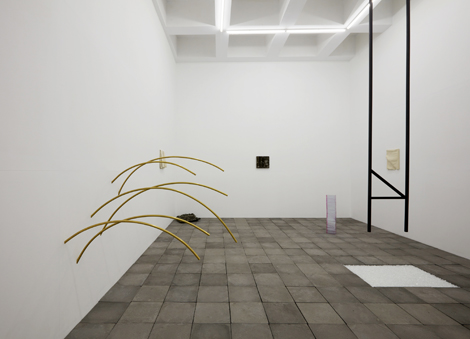
(Ayesha Sultana, A Space Between Things, 2015/16, Courtesy Ayesha Sultana, Dhaka Art Summit, Samdani Art Foundation and Experimenter Kolkata (IN), photo: Jenni Carter)
The oldest still-existing biennial in Asia is for instance in Bangladesh (the Asian Art Biennial, founded in 1981), as well as one of the oldest photography festivals in Asia (the Chobi Mela, founded in 1999).
In her lecture, Diana Campbell Betancourt will speak about these institutions, which were built from the ground up and the practices they have been using to draw international visitors to Bangladesh. For example to the bi-annual Dhaka Art Summit.
Check out her lecture from last year's conference Global Academy.
Her lecture will take place on 9. August at 7 p.m. at Galerie 5020, Salzburg.

