
19 / 30 This is how the world is (too / not)
Your name bears the trace of a journey. Maybe, not of a journey that you undertook yourself, but of journey of your parents or grandparents. Almost every family has stories of migration hidden in their names. These overt and covert stories were the point of departure of Tobias Zielony’s photography class on migration.
In the very first session each student had to tell the story of his or her name. If you play this game among your friends, you will realize that migration is taking place all the time and at all times. It has many more faces than the omnipresent pictures of refugees that you see these days in the media. This was one of the aims of Zielony’s class: to create pictures of migration that go beyond the cliché of the migrant. I met Tobias Zielony to talk about teaching, inhibitions and the tasks of documentary.
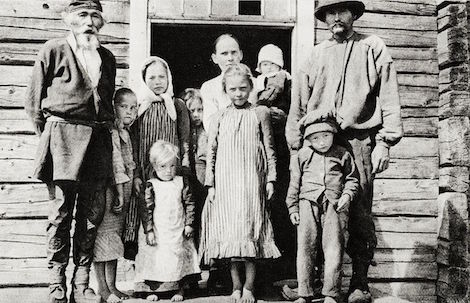
What is the first thing you do when you meet a new group of students like here in Salzburg?
I really try to get them into working very fast. We used the introduction to ask them for their ideas for projects. It is really important to me that somebody continues from where they already are. This is also how I start my own projects. You always try to advance something that somehow is present already. So that you don’t start with nothing. In that way, I did not give that much input to the group in the beginning. Some people might have thought in the beginning that we go together into the city and take pictures. But I think it is much better when they go on their own, do research on their own, make contacts on their own. Really simply, just going and approaching people.
This was the big enigma of your course to me. How do you approach people that often have had a difficult journey behind them? Particularly, if you only have two weeks. Usually it takes longer to build a relationship of trust.
Two weeks is short indeed, but it is still enough. At some point everybody has to overcome their inhibitions and make that experience: ‘there is nobody that is going to help me now. I just have to do it myself now.’ If you are in a group and all are working that way, usually a dynamic starts where everybody goes out and overcomes their inhibitions in one way or the other. I think the group is really important in that. You see and realize: yeah, you did it that way, maybe I can do that, too. Luckily, there were different events, for example a film screening by Refugees Welcome and city tour with people who moved to Salzburg organized by the summer academy. This was a great opportunity, because sometimes it’s a little bit easier to have such a semi-official situation to approach people.
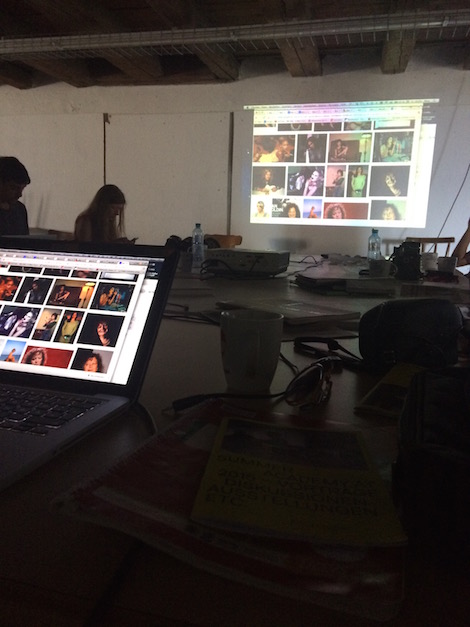
Visiting your class I got the feeling that group experiences are really important to you as a teacher. Also, that the students learn from each others’ experiences.
For sure, we only do group discussion and we meet every day and then everybody tells what is going on. What did not work? Where were problems? I did it this way, and so on. One person for instance did not tell from the beginning that she wanted to take pictures to people that she met. Rather than that she was really nice and people would misread her approaching as flirting. Now she has changed her approach. To some people this approaching comes really naturally, but every body has to figure out their own ways.
What other topics came up at your discussions?
More than composition and technical issues, it is really important to me to ask: what kind of images are you taking? You have to take decisions. Background: yes or no? Abstract: yes or no? These are all important decisions. It is really important to make students aware of their own decisions. You have to point them to consequences that these decisions carry with them. This is not about simply making a picture more beautiful. It is to ask: which kinds of pictures do I want to take? Which clichés do I want to resist?
Tell me more about these questions. Do concerns with representation and documentation play a role? There is this saying: documentary lurks at the fringes of the image.
It is increasingly more difficult to work with term documentary. Because all kinds of things constitute reality, even fashion and art. And then afterwards they are supposed to stand for a particular time. But you produce reality when you represent it. Therefore it is really difficult to work with the term. For me it is more important to work through different relationships to reality and translation processes between different realities and to ask which role pictures play in that.
Despite these difficulties of documentary, it seems to me that as a mode of reception, as an affect, documentary is still very much alive.
Yes, because reality is happening and politics is happening. And in the end documentary is about communicating what is happening and how to talk about it. This is as necessary as twenty years ago. However, it is less naïve today in a way. You don’t take a picture and then say: this is how the world is.
18 / 30 Halftime – 10 instructions
Eighteen out of thirty. More than half of my time as your observer in residence is over. I feel that I have more questions than upon my arrival. It all started broadly with: how is art taught today? How can you teach a practice that itself refuses the idea of teaching? Each course at the summer academy finds its very own answers to this. Despite that, certain motifs, certain questions have appeared in all classes. How do you enable somebody to figure out an artistic intention? How do you build an artistic practice? How can you move away from it to arrive at new positions?
As the internet and you love lists, I present to you a preliminary list. This is a list of strategies to learn/teach art. I have observed and wrote on each strategy within one of the last seventeen posts. I found two tasks were present in all courses: firstly, building of an artistic practice. And secondly, developing of an artistic intention.
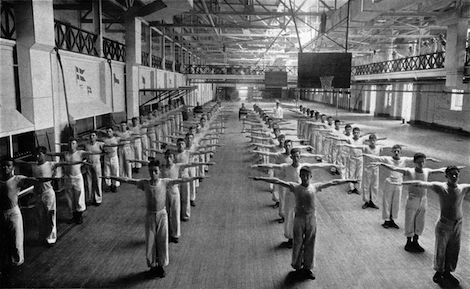
1. Do the Gymnastics!
The first step is always the hardest. The only way to build an artistic practice is by producing. Producing here means to overcome one’s initial paralysis. In Ben Katchor’s words:
“Because I found the biggest obstacle was that there is so much ego involved in making anything. I said I just make pure exercises like in a gymnasium. It doesn’t matter what the quality is. The main thing is to force yourself to make pictures and to write.” Ben Katchor
2. Get to know your intention and accept it.
“The central thing is an artistic intention. An artistic intention develops from the desire to found something, to create a new aesthetic, because you are not satisfied with the status quo. This is something like the artistic Urtrieb, the one drive behind all artistic intentions. Then it is important to locate and accept your intention. This is the most difficult thing about art. Because accepting your will or your intention has consequences. The freer you become in your way of thinking, the more you get restricted from the outside.” Bernhard Martin
3. Head space! Look out for a void and fill it.
“Instructions like ‘you have to do this’ or ‘this is how it is done’ don’t work. Rather than that learning art has to do with reflection and with a particular headspace. Only if you are confronted with a headspace, with some kind of void you have to fill, you start to ask the right questions.” Bernhard Cella
4. Continue where you are.
“For me that is the most important thing, working photographically means working with layers of the real. It means always working with your social context: where you are in society in relationship to your working. If you are doing street photography or if you are constructing images, what sense are they making? Because otherwise if it is just a snapshot for a photo album, that is fine, but that’s not what I am interested in. It starts with the self. If you don’t know who you are yourself, you are not going to be able to figure out anything else in the world.“ Jayce Salloum
5. Use objects to think.
“It is really important to me that we build dummies. I really try to get them to translate their thinking process into an object. There is no thinking process without an object. I don’t want to look at something before they can show me something concrete. It is really important to collect your own mistakes and errors.” Bernhard Cella
6. Don’t stop interrogating too early.
“And the way to arrive at these things is purely through interrogation. You just keep questioning the thing you are talking about and if you stop questioning, you have an action adventure movie, some stupid plot, where somebody wants to kill somebody. But then if you investigate why do they want to do it and who care why they want to do it, you keep interrogating the premise of what you are writing about, you will get to some interesting revelation. But I think a lot of people don’t have the energy to do this. And you have to throw away a thousand ideas and maybe if you keep thinking about it you will hit one.” Ben Katchor
7. Then break your patterns.
“So, I try to create situations in which my pace doesn’t always overlap with other people's pace. I am creating this gap, so I can maybe hide myself in there. It is something really personal. I just gravitate towards discrepancy, to be not synchronized with the rest of the world.” Tiancheng Cao
“It is all about breaking your own patterns as an artist. To do something that you would not do usually and then see what happens.” Bernhard Martin
8. Don’t change all the parameters at the same time.
Artists feel either really good or really bad about themselves, but there is neither a here or there. It is a process like doing research. There is a method and in certain moments you evaluate while in other moments you make. And then there is a lot of context, your personal and material context. These things are quite easy to quantify. It is not like ‘anything goes’. There are things that you can name. It is a little bit like in science: you can’t change everything at the same time. It is possible to talk about all these things and it is possible to organize even the things you don’t know and even the failures and the downs and the problems and to put them in a place and come back to them later. Varda Caivano
9. Do the striptease. Become another to arrive at your intention.
“We already talked about striptease, but we can also talk about travesty and about role plays. They all share the same notion of a radical change of self, of pushing something over top, but also a form of radical acceptance of the self. And this is also what happens when you are painting. During the act of painting you transform into different kinds of persons. Sometimes you are focused and even anxious, other times you are really relaxed and just let everything happen and give up control.“ Bernhard Martin
“You are only five to ten per cent yourself. And these ten per cent you have explore and discover. You have to locate these ten per cent, this rest of yourself, that is not just the institutions that you are living in. And then you have to exercise them and make them your practice.” Bernhard Martin
10. And all throughout this: be a good chameleon.
“Either you should show your own feelings or you adapt and become invisible. A bad chameleon is one that cannot decide and tries to do both at the same time. Shall I try to show how I feel or shall I adapt?” Maja Lundberg
17 / 30 They were like animals
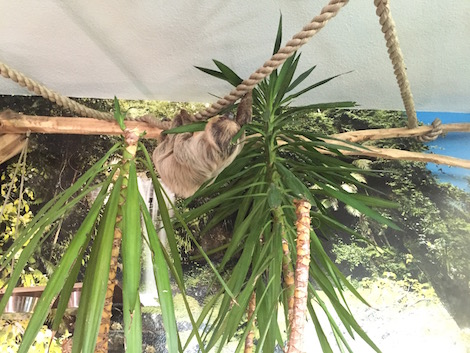
“We all should learn from sloths. You don’t have to be beautiful and you don’t have to do a lot to be adorable.” Maha Maamoun
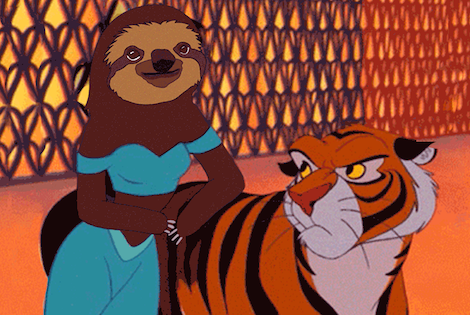
What if Disney Princesses were sloths? This question was recently raised rather graphically by Buzzfeed editor Jen Lewis. It embraces some of the key issues of Maha Maamoun’s course on experimental video practice at the summer academy.
“When does the need arise to use animals or animal metaphors to talk about personal or political issues? How do we use animals as symbols or proxies for other subjects? And how does this use of animals help or delay our understanding of ourselves and others, and of the societies we live in?
The first week of Maha Maamoun’s course felt like an extensive material review of films, texts and artworks with animal appearances. The aim was to sensitize her students for the use and abuse of animals in contemporary art.
One of many examples is the documentary Nénette by Nicolas Philibert. Its protagonist is Nénette, a fourty-year old orang-utan living at the Jardin des Plantes in Paris. We see her in her glass cage looking silently back at the visitors, who comment on her looks and behaviour. As viewers we only see her, looking at us. The comments of the visitors come only from the off-screen space. Philibert omits to anthropomorphize his protagonist. At the same time he documents the different projections that the visitors read into her behaviour.
It becomes clear here that the animal is an indefinite, unstable and unpredictable being for us humans. Anthropomorphizing it is only the easiest way to cope with this indefiniteness. The same is true for ‘animalizing’ human relationships. It seems the animal oftentimes addresses indefinite relationships that cannot be addressed by other means.

A few days after watching Nénette on screen, I find myself in the zoo of Salzburg as visitor, looking at animals through glass windows. Maha Maamoun’s students swarm out to record the animals in their habitats. To be honest, I find many zoos depressing. You oftentimes can see how the animals are suffering or are just bored. Yet, the zoo in Salzburg is strangely open. At many of the compounds I wonder why the apes or flamingos don’t simply escape. They seem to like it there.
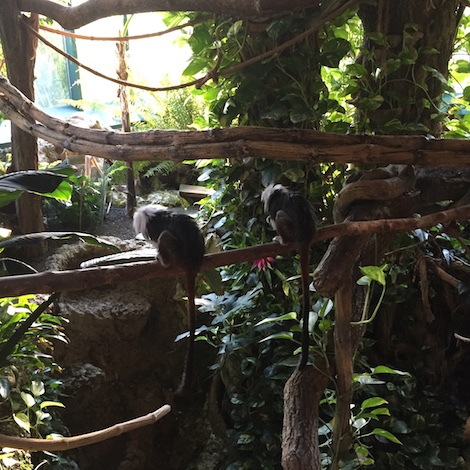
Robin from the Netherlands is fascinated by the zebras: there are eleven official theories why zebras have stripes and yet there is no final agreement why. He films their bodies in close-up, so that the bodies turn into indefinite movements. I am particularly fascinated by the names of the animals. Interestingly, in the zoo, most animals have two names attached to their compound: a chosen name and the name of their patrons. The local Jaguar car dealer for instance sponsored the jaguars. When do we give animals names? And why? Is giving a name to a being not the first step taking away its indefiniteness? Yet, is giving a name not also the first step to acknowledge it as a being? A name is never just a metaphor.
16 / 30 Mental Maps
Yes, form follows function.
But whom does function follow?
Does it follow the people constituting a space?
Or those governing it?
Yes, form follows function.
But while utopia wanted new men, capital wants new circuits.
While utopia imagined the future, capital imagines the absolute present.
Is there time today to follow?
Yes, form follows function.
But once in place, which one remains?
Which one erodes faster?
Use(r) or (infra)structure?
When talking with feld72 I get the impression that public space is at the same time hyper-fragile and one of the most robust continuities of human civilization. This weekend their new museum has opened its doors in Salzburg. Only for one day, though, as it is a nomadic museum: the museum for public space.
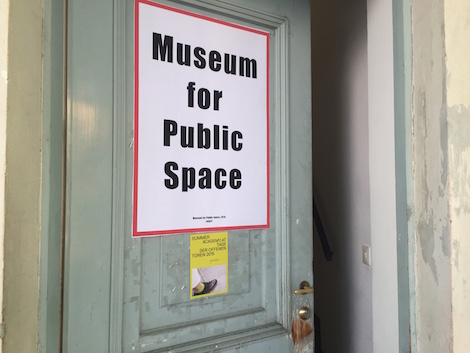
You could find it in the abandoned former Baroque Museum at Mirabellplatz. Once you entered an inconspicuous door next to the place where the Sound of Music tours start, you would not find artworks at first. Rather you would make your way through the extensive documentation of the group’s research on public spaces in Salzburg. On countless photos, texts and maps, you find the story of a Peruvian Mozart mime dressing up for his performance. A Syrian refugee who is sitting everyday at 14:00 at the same spot to wait for his bus after his German class. A Salzburger who avoids the inner city during the day, because of the tourists.
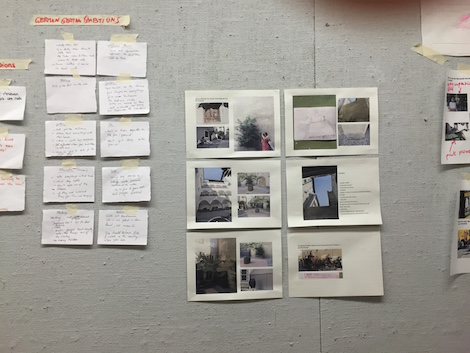
Their aim of feld72's class was not only to explore the physical public sites of the inner city, but also ‘mental maps’. This is what Michael Obrist calls the actual public space. The protocols, habits and invisible borders that different individuals and groups act out in public. What do people actually do in public? What do they avoid? How do they use what is there? The class collected observations of all kinds through the practice of “extensive hanging out”.
These mental maps were documented and became the point of departure for the artistic interventions of the students. Like Mihai Teodorescu’s work Safe that also manifests with a mental map. The artist from Bucharest built a neo-light installation for Königsgässchen, a small obscure alley in the centre that lies aside the main tourist routes.
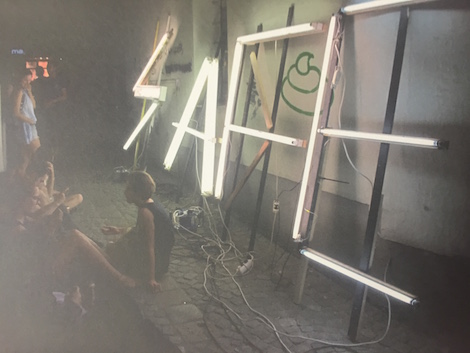
“It is about different layers of security, of how one perceives it. For me it starts with a nice and cosy feeling generated by the presence of light in an otherwise dark street. It is also about the ‘Western promise’ that everything will be ok as soon as you arrive, all life questions will be answered and the future secured for a longer period of time, different from the day-to-day struggle from back home.”
Teodorescu’s work shows that mental maps are subjective and connect places and longings. They are psycho-topographies that show how places are connected through bodies, material and feelings: like the back alley in Salzburg with the ‘Western promise’ of a street in Bucharest.
Mental maps are as ephemeral as the artistic interventions of the students. They change with the people that constitute a public space. The interventions of the feld72’s class are thus only momentary manifestations of an invisible cultural and emotional infrastructure that governs how we move through cities as much as physical streets and buildings.
15 / 30 Fact-based Funny
“I have never laughed about a photo. But it is incredibly hard to make people cry with a comic.” (Nicolas Wild)
The silence in the studio of Nicolas Wild’s class on graphic reportages is astonishing. You hear scribbling and at time the rustling of paper. Nobody looks up when I enter the room. All the fourteen students are intensely immersed in their work. I can even hear my own footsteps. When I tell Nicolas that I am surprised by the silence, he laughs: “You need to be focused when you write and draw. You want to know exactly what you do. This is not like painting, you don’t draw with your whole body.”
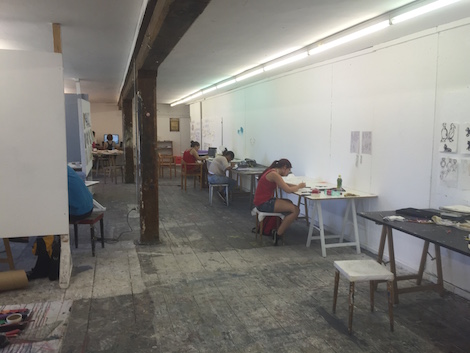
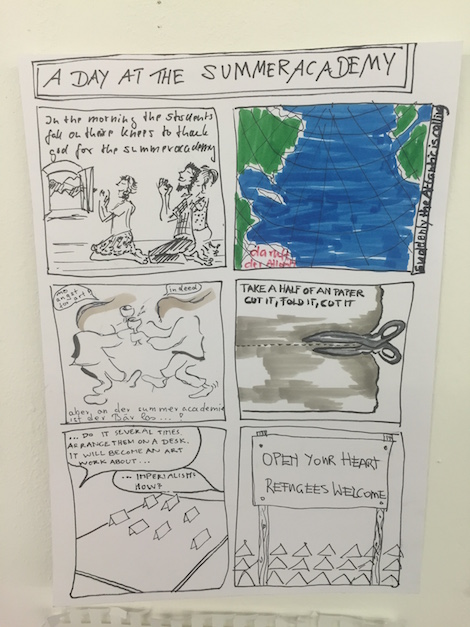
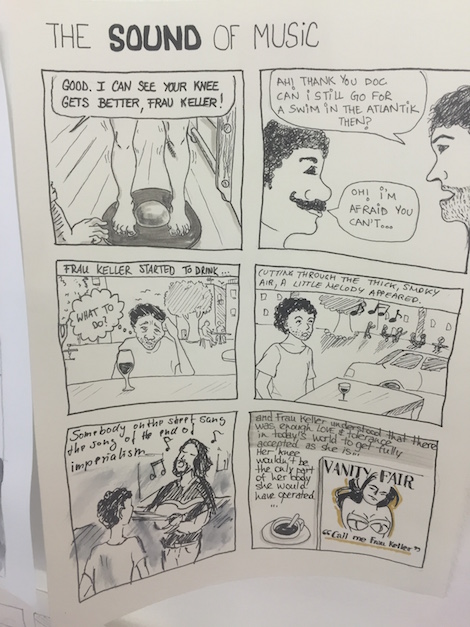
Exercise 1: I give you six words. Turn them into a comic story of six images. Each word has to make an appearance in at least one of the images.
Exercise 2: Draw the protagonist of a comic on a card. Write the title of comic story on another card. Exchange your cards with the others. Create a comic story from your two new cards.
I have been fascinated with graphic reportages for a long time. They are an often provocative mix between journalistic research and the aesthetics of comic books. As you can imagine, the styles reach from data visualizations to graphic novels based on real events. Nicolas’ last comic books documented his life in Kabul in Afghanistan. We leave his class to not disturb the others.
Let’s talk about graphic reportages. There seems to an interesting tension between the journalistic and artistic sides to it. How do you deal with claims for objectivity that journalism poses to your drawing?
It is impossible to make an objective drawing. Even an objective photo is impossible. Because when you draw, what you see is processed through your brain and then processed through your hands. Your hands also know things that you are not aware of. There are all those filters of reality that a drawing goes through. That is why comic books are so interesting. You can recognize the process that the writer or illustrator goes through when catching something. It’s really like a stage. You have to draw the expressions of your protagonists. You have to dress them. You have to give them a car and so on.
But you surely adapt your style to the story that you are telling.
It is always difficult at first to find a style that fits the story. Depending on what you want to tell, the style obviously changes. Tintin’s style has been designed to tell adventure stories for example. As a kid I got to know the world through Tintin. The first time I travelled to Tibet and the first time I travelled to the moon was with Tin Tin. Afterwards when I started to travel to different countries for reportages, I always had to think of Tintin.
Is this style and the humour connected to it a way to cope yourself with the serious reality behind your stories?
Two of my comic books were chronicles of my life in Kabul. When you live in Afghanistan you don’t think about violence and war all the time. You have an everyday life. So, you don’t usually pick the hard topics at first. In Afghanistan the people have a lot of humour. They laugh a lot about their tragedies. It is a way of surviving. So, I was paying tribute to the Afghan humour by doing something funny. Most of the stories that we know from Afghanistan are sad and depressing. So I said, lets make a comic to ease a bit the pain. Comics are good for the soul.
How does your teaching relate to your own work? How do you start with a new work?
I don’t do what I teach my students. (smile) I don’t go from idea to storyboard to drawing. When I have a general idea, I create some key sequences. Mostly, this is the first and the last sequence and some sequences that inspire me to continue working. And then the rest grows organically. Even when I am almost finished I move sequences and materials around. So, I am constantly re-writing the story even when I know how it ends. This works fine as long as you work alone and do everything yourself. When you collaborate with a writer or an illustrator this is a much more linear process.
Why is this important to you to create these visual reference points?
If you have the end of your book in mind, it is easier to write everything else. You never get lost, because you have a target, even if you take detours. For the first sequence you have to do something intriguing, something punchy. You have to grab the reader and say: come with me! We are going on an adventure! It’s like in a Shakespeare play. They always start with a storm or a sword fight. Because back then in theatre people were shouting and not paying attention. When you have a storm everybody is like: ok, now it starts.

