
| « Stammtisch | Looking at things » |
Storytelling
Oral story telling is an ancient tradition that has been being performed from Ancient India to China, from Northern Africa to Europe. Throughout the history various performance styles have been generated. At the old square Jemaa el-Fnaa in Marrakesh, every evening oral story tellers set up their installation with ostrich eggs, feathers, all kinds of spices and objects to present a one-man-live-act of the story… Yesterday, Ben Katchor gave another example from Japan called Kamishibai – a frame box attached to a bicycle holds the stacked up drawings that is narrated by the performer (please check the post of the previous day to watch the video). Puppet theater or Hacivat and Karagöz from Ottoman Empire are other examples of performing stories.
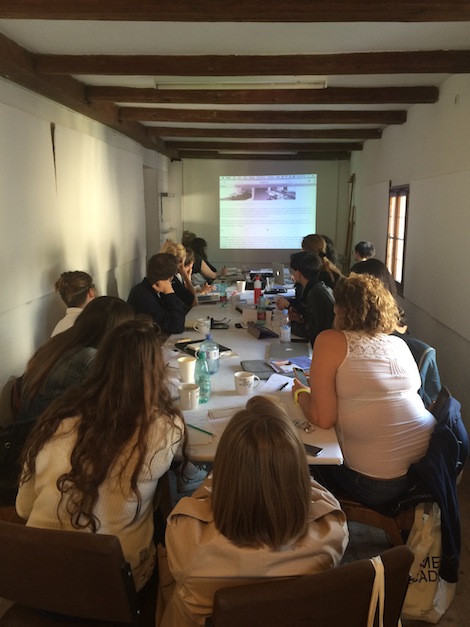
Alya Sebti and the students discussing case studies
How to look at things to form a narration, which words to use and how to place them in the work have been discussed in the classes The Notion of Subject Matter (Ahlam Shibli), Comics in Performance (Ben Katchor) and Curating/Translating the Polyphony of Voices (Alya Sebti). For instance, if you would like to tell a story with a camera, how do you do it? Would you imagine a photo book with texts or would you prefer not having informative texts at all? How would you perform the text alongside the drawings or where exactly would you position the text? The class of Sebti travels around similar concerns from a theoretical perspective by focusing on unwritten histories of othereds and finding the words to describe neglected cultures in the spaces of contemporary art.
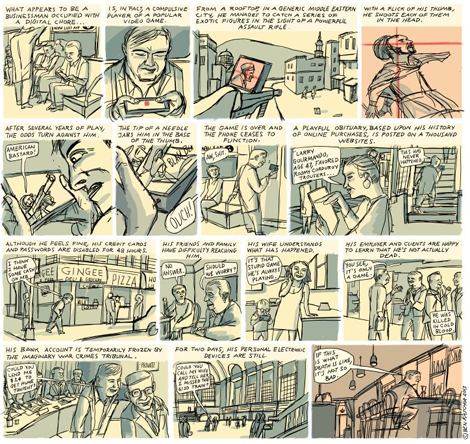
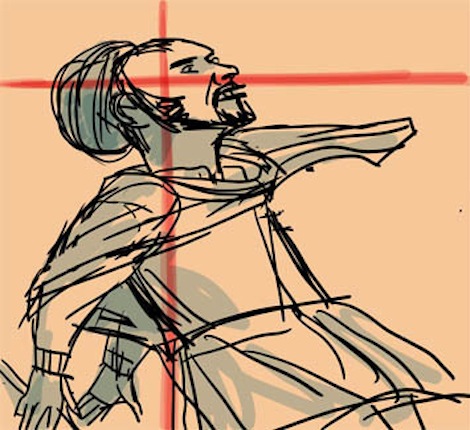
Before moving forward with the conversations at Sebti’s class, I would like to mention the comic The Imaginary War Crimes Tribunal performed by Katchor at Museum der Moderne Salzburg the other day – originally published on Metropolis Magazine – depicting a game addict. The game is based on shooting ‘Arabic men’ randomly, who are all considered as enemy without exception. All of a sudden, the so-called enemy points the gun back to the game player and he dies (I mean that is the complicated part of the story: is it real or virtual?). The story continues with the after effects of this death. Some months ago, Democracy Now published an interview with researcher Lydia Wilson about the interviews that the researcher conducted with imprisoned ISIS members in Kirkuk, Iraq. Although not approving ISIS’s position, Wilson pointed out a very important aspect of what is going on in Iraq and Syria, reminiscent of the comic of Katchor’s:
“There was this driving anger against Americans, against the occupation—but not in terms of this ideology that we see coming out of the ISIS official publications or through social media. It was anger—it was much more personal. It was much more about their own childhoods and adolescences, that they had been blocked from having a normal life because, as they saw it, of the American occupation.”
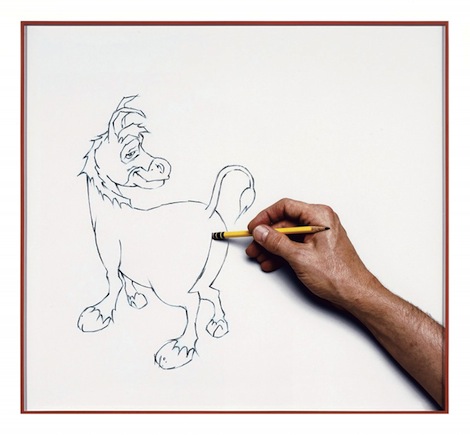
So, may we say that the gaze and anger is turning back to where it is originally coming from? Can the methodology of undoing be another way of dealing with power? How about re-writing and re-narrating or unpacking the luggage and re-packing with a new order as Ferdiansyah Thajib from the collective KUNCI explained during a Skype meeting with Sebti’s class? What Larry Johnson's Untitled (Ass) (2007) has to do with it?
To be continued….

